

A landmark of Chicago’s Art Deco skyline is on track for a $100 million makeover, this time as housing.
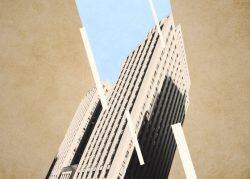
Riverside Investment & Development, AmTrust Realty Corp. and DL3 Realty secured city approval and nearly $100 million in public subsidies to convert the historic Field Building at 135 South LaSalle Street into 386 apartments, Bisnow reported.
The $241.5 million redevelopment, the largest in Chicago’s LaSalle Street Reimagined initiative, will convert more than 624,000 square feet of vacant offices to residences and add 92,000 square feet of commercial space.
City Council signed off on the project’s tax-increment financing package late last month. The plan includes $98 million in city funds and historic tax credits — the kind of public support developers say is crucial to making office-to-residential conversions pencil out.
“But for the incentive, this will not work,” AmTrust managing director Patrick Kearney told the outlet, whose firm has owned the 45-story property for over a decade.
Construction is expected to begin in early 2026, with the first units delivering in summer of 2027.
The plan calls for 270 market-rate and 116 affordable apartments — all priced for renters earning up to 60 percent of area median income. Units will average about 700 square feet, with projected rents in the mid-to-upper $3 per square foot range.
Two full floors will provide 180 parking spaces, while lower levels will offer retail, event space and possibly a small grocer, café or fitness concept.
Built in 1934 and landmarked in 1994, the Field Building — designed by Graham, Anderson, Probst & White — was once Chicago’s fourth-largest office tower. Its “H”-shaped floor plan and deep setbacks, ill-suited for modern open-office tenants, lend themselves to residential layouts, said Riverside’s Mike Potter.
“The very principle that every office had access to natural light and air makes these floor plates ideal for efficient apartments,” Potter said.
The building’s fortunes dimmed after Bank of America vacated roughly 900,000 square feet in 2020, leaving a rare block of contiguous vacancy that made conversion easier.
“This is a really authentic Chicago property,” Potter said. “It’s exciting to see the Loop reinvent itself — again — from the inside out.”
— Eric Weilbacher
Read more

Commercial
Chicago
Riverside refinances 150 North Riverside office tower with $470M loan

Chicago
Kiss the ring: The Ballad of Brandon Johnson

Commercial
Chicago
DL3 Realty nears lease with Discover for 127K sf
Commercial
Chicago
LaSalle Street office building value plummets, leaving owner just above water