

Two months after Miami created the Allapattah Community Redevelopment Agency, the city is drilling down on specifics on how to approach its makeover and entice development without losing residents or diversity.
A preliminary plan projects roughly $800 million in revenue from tax increment financing over 30 years, with the majority of that targeting infrastructure improvements and adding affordable housing, according to city records. Some of the top projects are Northwest 17th Avenue streetscape and façade improvements, as well as a mixed-income project on the 18-acre city-owned General Services Administration site.
Miami commissioners greenlit the Allapattah CRA in April, after years of talks about creating the agency. Now, the Miami Planning, Zoning and Appeals Board on Wednesday will vote whether to adopt a redevelopment plan created by Miami-based consultancy BusinessFlare.

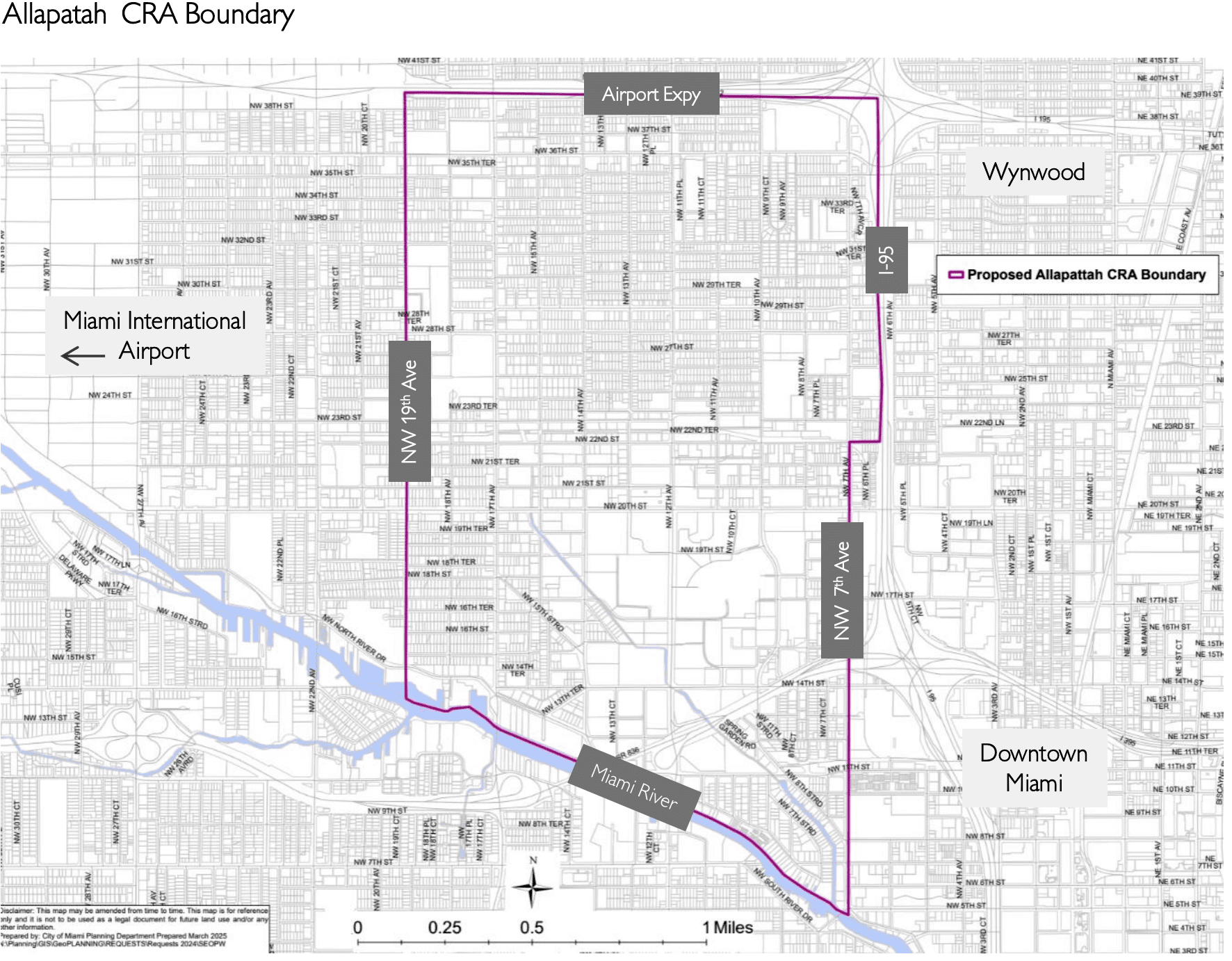
The Allapattah CRA spans from the Miami River north to the Airport Expressway, and from Northwest 19th Avenue east to I-95 and Northwest Seventh Avenue. The area, home to about 45,000 people, spans 4.7 square miles and over 1,600 acres.
Under Florida law, CRAs reinvest property taxes collected from increases in taxable values back into the areas, a mechanism known as tax increment financing. The Allapattah CRA’s total taxable value for this year is $3.1 billion. This means that any taxes collected from the growth of values over that amount can be reinvested in the area and also leveraged for government grants and bond financing.
Over its 30-year lifespan, the Allapattah CRA is expected to generate about $800 million in tax increment financing.
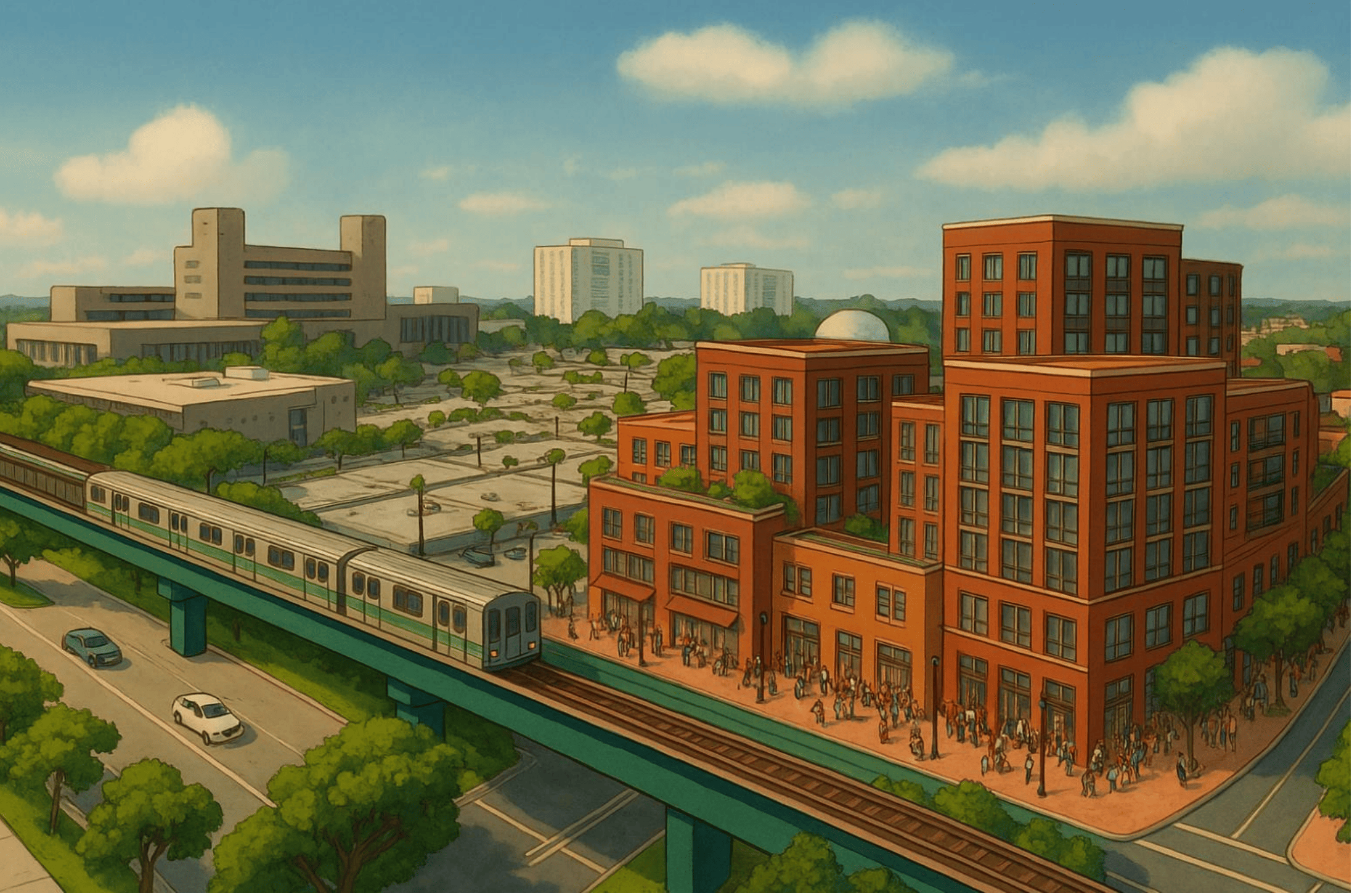
BusinessFlare’s plan, created after a slew of community meetings, identifies infrastructure improvements as one of the top priorities with an estimated cost of about $90 million. Aside from Northwest 17th Avenue, which is envisioned to become a Main Street, the plan also targets Northwest Northwest 36th and 20th streets, and Northwest Seventh and 27th avenues, as well as improvements to the Allapattah and Santa Clara Metrorail Stations. It calls for storefront restoration, street lights and security measures such as cameras.
Allapattah, which means alligator is Seminole, was a farming settlement in the mid-1800s. In the 1960s, residents from Miami’s historically Black Overtown moved to Allapattah after being displaced from the construction of Interstate 95. In subsequent years, it became home to Nicaraguan, Haitian and Cuban immigrants and eventually earned the moniker “Little Santo Domingo” due to its significant Dominican population.
The CRA plan aims to prompt more development and investment. The neighborhood’s median household income in 2024 was about $31,300, significantly lower than that of Miami and Miami-Dade County as a whole. About 80 percent of households are renters.
BusinessFlare’s plan outlines a proposal to foster affordable housing development and local hiring, including for senior residents, as a way to curb gentrification and allow longtime residents to stay in Allapattah.
The proposal prioritizes housing development on the GSA site at 1970 Northwest 13th Avenue and 1950 Northwest 12th Avenue, though in recent years several efforts have failed. In April, Miami officials restarted a solicitation to developers to build out the site after previous unsolicited proposals failed, Miami Today reported. A potential project may add 2,500 units to the site.
Still, redevelopment is expected to be slow. Work during the first three years will focus on streetscapes, small business grant funds and smaller projects such as market pop-ups on vacant sites. The Northwest 17th Avenue and smaller affordable housing projects would come to fruition in the subsequent four years, with the full buildout of the GSA site expected to take a decade, according to BusinessFlare’s report.
The proposal calls for tapping an Opportunity Zone in the north section of the CRA and points out that a majority of the area is a brownfield. These sites require environmental remediation due to previous industrial uses, though the upside of this is that it allows the CRA to tap government grants allotted for such cleanups.
Allapattah — which has a mix of uses, including single-family homes, retail and industrial buildings — has hardly been devoid of development proposals and investment in recent years.
Lissette Calderon’s Neology Group has a steady pipeline of projects. This month, it paid $24 million for the 1.5-acre industrial property at 1090 Northwest 23rd Street from the Rubell real estate and art family. The site will be home for the second and third phase of a three-part residential project planned by Neology, the Rubells and Lion Development. The first phase, consisting of a 21-story, 330-unit apartment building, will be at 1000 Northwest 23rd Street.
Others who set their sights on Allapattah early on include developer Robert Wennett, known for completing Miami Beach’s 1111 Lincoln mixed-use garage. In 2018, he revealed plans for a Bjarke Ingels Group-designed, 1.4 million-square-foot mixed-use project, though the development has had little movement since then. Plans call for 1,200 residential units, 227 hotel keys, 230,900 square feet of offices, 97,000 square feet of commercial space, 54,200 square feet for educational uses, 1,078 parking spaces and 57,000 square feet of civic space.
Wennett called his vision the Miami Produce Center, an homage to the development site’s and Allapattah’s history as a produce wholesale center.
BusinessFlare’s plan projects roughly $45 million in spending for economic development programs such as small business assistance grants, workforce partnerships and other business growth initiatives, as well as $33 million for improving parks and other community areas such as Juan Pablo Duarte Park’s renovation.
In recent years, community groups have sounded the alarm over Allapattah gentrification from new development, with some also coining the term “climate gentrification.” Allapattah is one of a few Miami neighborhoods on higher ground — its elevation varies from 6 feet to 10 feet above sea level. Critics argue that longtime residents priced out by higher home prices and rents will be pushed to lower lying neighborhoods. By comparison, booming Miami area Edgewater is as low as 2 feet to 3 feet above sea level, and Miami Beach’s southern tip is at about 5 feet to 6 feet, a Florida International University study showed.
Read more
Development
National
Higher ground