
Growing up in Bethesda, Maryland, just across the line from Washington, D.C., and before I went off to college in the Midwest, we lived next door to the then-president of Gamblers Anonymous. He would pitch to my family in casual conversations that gambling addiction was actually a disease. While I’m not sure about that, I think that he helped form my anti-gambling stance as an adult. I’ve given appraisal seminars in Atlantic City and spoken at events in Las Vegas, and while there, I observed many people throwing unbelievable amounts of money into slot machines while the smell of tobacco and stale beer permeated the rooms. There was nary a clock or window in sight. Las Vegas is currently seeing its tourism fall sharply as the economy shifts to non-gambling revenue. On our recent road trip, we went to Niagara Falls in Canada, with casinos on both the American and Canadian sides. We saw lots of weed-filled vacant lots everywhere, similar to Atlantic City. It was fun to ride a boat into the falls, but I found the city quite depressing.
Beyond an uptick in local employment, the cash flow pouring through these gambling meccas never seems to be directed toward enhancing the cities where they are located. Sports betting ads from FanDuel and DraftKings have become ubiquitous on my television set during sporting events, and much of the dollars flowing across Polymarket and Kalshi pertain to sports betting. I follow the CME Group FedWatch to see what futures investors are thinking about rate calls at upcoming FOMC meetings.
When I was in college in the late 1970s, I could live on $10 per week buying generic food (in white boxes with black stenciled letters such as “Macaroni & Cheese”). I’d buy a $1 lottery ticket every week at the grocery store, and I won anywhere from $2 to $20 nearly every time I went. I never reinvested my winnings in more tickets as most seem to do. I took the cash and bought gas for my 8-mile-per-gallon clunker. Today, my wife likes to buy a lottery ticket every few weeks, which I tend to sermonize as “cheating at life,” but still hedging my bet with a 50 percent claim of marital property if she wins — she never does. I thought the proposed Casino in Manhattan last year was a bad idea and was glad it did not pass. I talked about this and other close calls with gambling last fall in “Casinos Aren’t The Holy Grail Developers Seem To Think They Are.” In it, I recount a great insight shared by a former mayor of Atlantic City who spoke at one of the seminars I taught there.
Why we started gambling with shelter
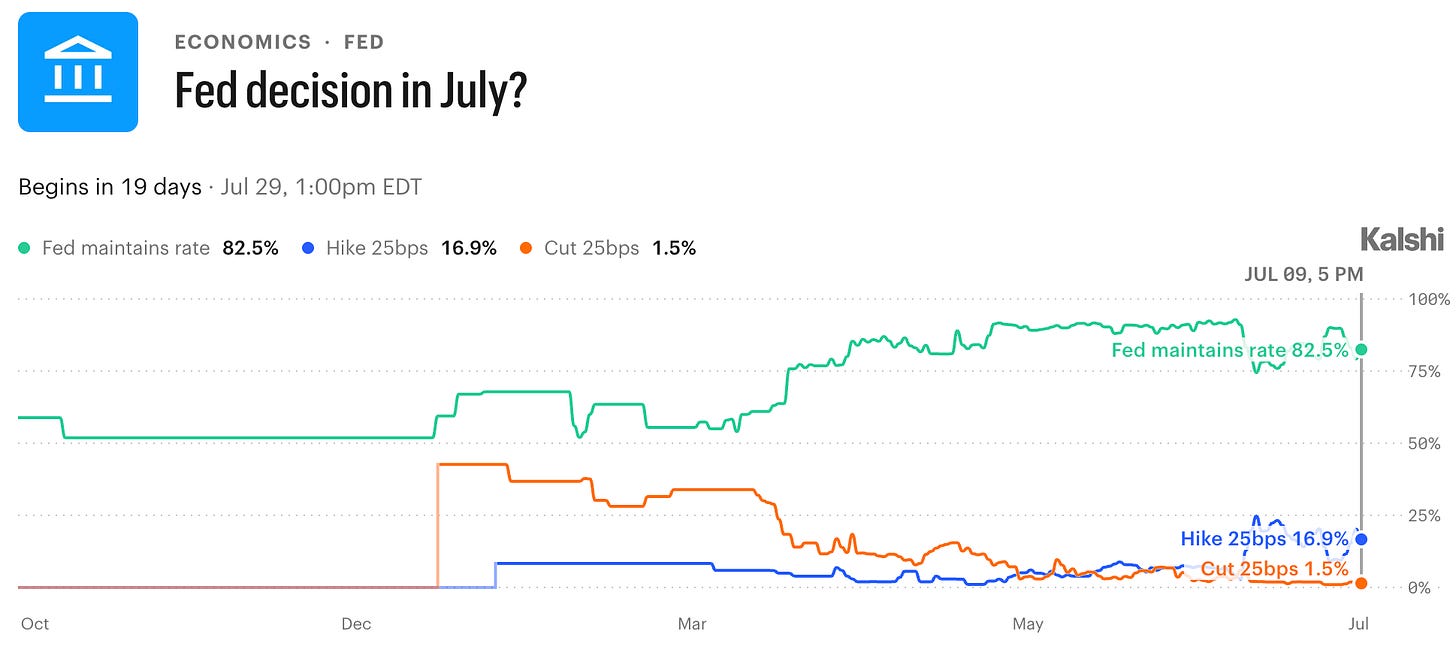
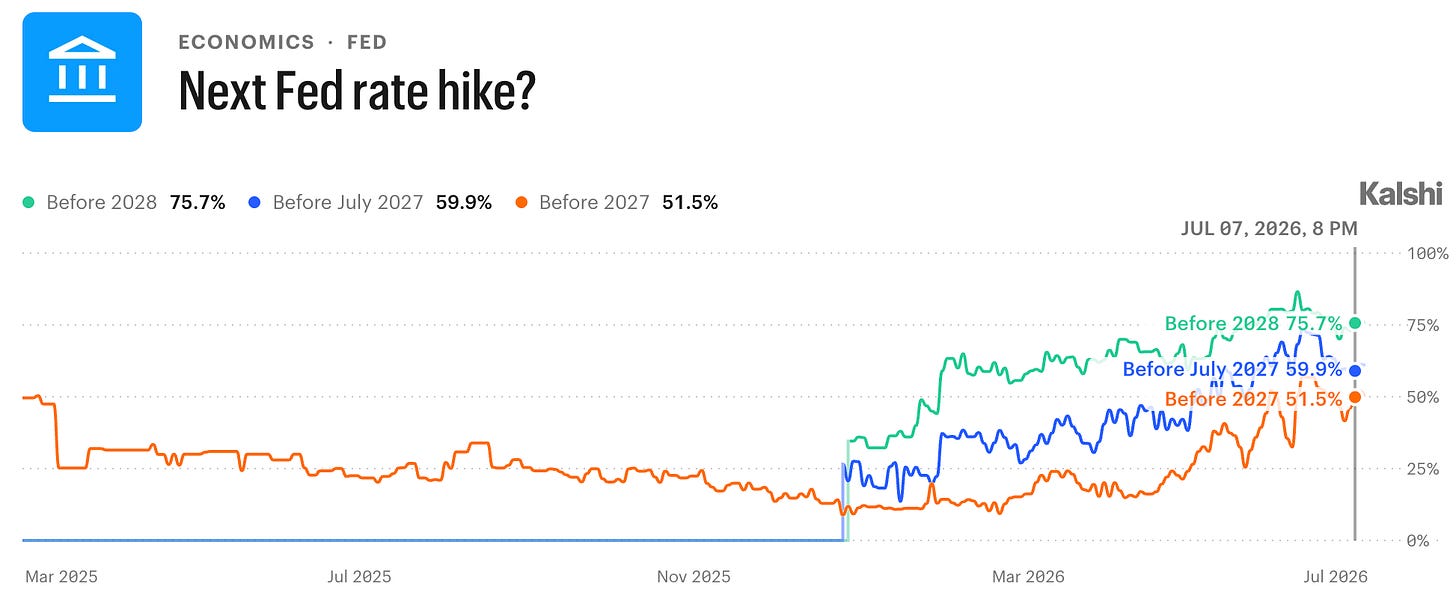
After standing on my soapbox about gambling, I want to share where this story idea came from and how it relates to housing. It started with an amazing Substack piece on Public Notice that I tripped over, definitely worth a read: “How Kalshi infects the news.” Admittedly, when Kalshi and Polymarket burst onto the national stage, I would refer to their markets for certain things like the odds of a rate cut at the next FOMC meeting and other things.
The Substack piece focuses on how CNBC and CNN struck financial deals with Kalshi and are paid when they credit Kalshi in their content. The problem with that is they often don’t disclose this in their journalism.
In December 2025, CNN and CNBC struck landmark deals with Kalshi, a leading prediction market. Since then, both networks have promoted Kalshi to viewers extensively, frequently vouching for its accuracy. The existence of a financial relationship between the networks and Kalshi, however, is disclosed to viewers inconsistently.
These news outlets hype the idea that these investors are people “putting their money where their mouth is.” Public Notice referenced a 2026 study that analyzed 292 million trades on Kalshi and Polymarket that said “Kalshi’s political markets ‘compressed toward 50%,’ meaning they systematically overvalue longshots and undervalue favorites.” Perhaps those futures investors “putting their money where their mouth is” aren’t the economic panacea that the networks infer they are.
Housing has become an event to bet on
About 20 years ago, I was part of a housing market platform known as Radar Logic that enabled the trading of futures options, a real competitor to the S&P/Case Shiller index. Back then, data was not as easy or as affordable to obtain digitally as it is now, and the S&P/Case Shiller index lags the “meeting of the minds” between buyers and sellers by five to seven months. So the trades of contracts you see today are based on market forces that existed back in January. Hardly relevant.
This new generation of prediction platforms now lists contracts on national and metro-level home price indices, allowing people to bet on whether median prices or Case‑Shiller levels will be up or down by specific dates, without owning property. They also host markets on macro variables that directly affect housing, such as CPI shelter components, mortgage rates and Fed decisions, effectively turning key inputs to housing affordability into high‑frequency betting instruments. The Fed likes Kalshi.
Here’s the problem with these predictive markets in the housing space as I see it:
- Self-reinforcing: These markets can amplify caution or optimism beyond market fundamentals. Because a market is being traded, it suggests that the investors know what they are talking about.
- Retail speculation: Small traders turn housing into a tradable asset, not just shelter. This type of speculation was the worst part of the Great Financial Crisis, as Wall Street pitched housing as a stock trade. You still see that orientation pushed on median outlets like CNBC.
- Narrative feedback loop: If everyone relies on prediction markets to make decisions, this feeds media coverage, influencing perceptions of bubbles and risk.
- Information asymmetry: Sophisticated traders tend to outperform retail participants, widening the gap. The parallel to these trades is exactly why I have been so critical of the private listings strategy currently being pushed by Compass.
- Incentivized information flow: Monetization of housing-related news may encourage strategic leaks or spin, akin to insider trading.
Final thoughts
Gambling, from casinos to prediction markets, often does more harm than good and is now creeping into housing. Platforms that let people bet on home prices and mortgage rates risk turning housing into a speculative asset rather than a basic need. This could amplify market swings, favor sophisticated players and make housing more driven by financial sentiment than local fundamentals.
The actual final thought — This is something I constantly experience.
Read more Housing Notes columns and sign up for email newsletters here.
Read more

Commercial
New York
State signs off on three casinos for NYC