

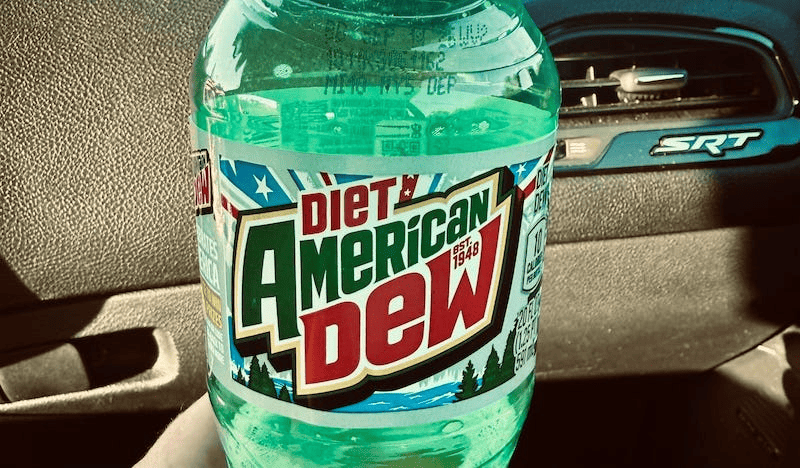
Quick take: I still contend that vacations are good, and I saw gas get a little cheaper in the Detroit Metro after about 1,400 miles of our 2,000-mile road trip. For those who missed an earlier post, we’re traveling through the Midwest to visit friends and family. We’ve already hit the DC Metro (the DMV), Nashville, Cincinnati, and Detroit. What we call soda in New York and Connecticut hits different in the Midwest, where it’s called “coke” in Tennessee and “pop” in Ohio and Michigan. And as a friend recently told me, “was there ever a question that Mountain Dew was anything other than American? It’s like Scrapple, Wonder Bread and the lightbulb in the pantheon of American ingenuity.”
Incidentally, the topic of the following post is about 3 days late from the initial drama, but that’s what happens when you go on vacation and unplug. I’m still on vacation but it is currently 98F in Detroit, so I chose to stay indoors and write this.
Inman pushes back on intimidation by brokerage monopoly
Kudos to Inman News for standing up to editorial pressure from a large advertiser. Apparently, CEO Thomas Bohn and his organization didn’t like being bullied into taking down an op-ed by Bess Freedman, CEO of Brown Harris Stevens.
The Bohn op-ed was a spectacular piece: “We can’t be bought, and we won’t be bullied,” which gave me an additional layer of respect for the Inman News organization. This is what industry leadership looks like. The following Bohn quote says it all.
“Concentrated power makes independent coverage harder and more necessary at the same time. Without it, an industry settles for stenography, where the largest players narrate their own story, and everyone else applauds on cue. A demand to delete a story before breakfast is a tell. No one confident in their position asks you to erase it.”
The op-ed that took no prisoners
Bess wrote a terrific op-ed that Compass must have felt was uncomfortably close to reality. Otherwise, why would anyone object to what Bess actually said? “Thus protest too much” comes to mind with the Compass pre-breakfast demand. The piece: Bess Freedman: Real estate is falling for the Madoff playbook, asking “What happens when our trusted professionals fail us?” is also brilliant. She uses Ponzi schemer Madoff as shorthand to illustrate how reputational sheen can mask systemic fraud or consumer harm until it collapses. The highlights of the key points she made were:
- Compass is systematically steering sellers into 90‑day private listing periods that keep inventory inside its own network, boosting double‑ended deals and firm economics while limiting market exposure and likely depressing achieved prices.
- The author argues that this behavior violates agents’ fiduciary and fair housing obligations by turning what should be narrow exceptions (e.g., celebrity, security) into the default, thereby reducing transparency and hiding key metrics such as days on market.
- Regulators are responding: New York’s AG has opened an antitrust investigation into Compass, and the state’s Fair/Free and Fair Listings Act would sharply restrict private listings by requiring rapid public marketing absent a state‑prescribed opt‑out, explicitly to protect consumers from these practices.
You gotta love Freedman’s chutzpah. Both Inman op-ed posts by Thomas and Bess suggest that Reffkin/Compass leadership didn’t like her op-ed piece and threatened Inman economically, saying they would pull all Compass advertising from the platform.
The real estate media stands tall
And you gotta love Bohn’s chutzpah, too. He confirms that:
“Inman does not work for the biggest brokerages, the loudest portal or whoever is writing the largest check this quarter. We work for the agents and brokers who do the job.”
Recently, Compass called me directly to say they noticed all my anti-private listings and monopolistic screeds on HousingNotes.com, and offered to hire me to write about their strategy and moves, as well as to conduct interviews with their executives. I declined.
Final thoughts
I have talked about their monopolistic behavior in the past. This is why monopolies are illegal — their 80% market share in Manhattan will eventually foster bad behavior. This is why there needs to be a regulatory review of their recent and unprecedented merger with Anywhere. Specifically, how they dodged it through knowing someone in the White House. Since federal oversight was missed and won’t be restored under the current administration, more state-level intervention is needed to offset the damage to consumers caused by scaling up private listings.
Disruption of the real estate industry is supposed to improve it for consumers, not mislead them.
The actual final thought – Rapping brings clarity.
Read more Housing Notes columns and sign up for email newsletters here.
Read more

Residential
New York
Compass slides back into antitrust spotlight