

For decades, the New York City Housing Authority tried to keep up its buildings without help from the private sector. It was like using paper cups to bail out the Titanic.
Even when NYCHA started enlisting developers to fix properties early in the de Blasio administration and ramped up those efforts under Mayor Eric Adams, it couldn’t make progress fast enough.
The numbers are mind-boggling. In 2011, NYCHA developments needed $29.2 billion worth of work. By 2017, the number had ballooned to $45.3 billion. Its latest physical needs assessment, in 2023, came to a stunning $78.3 billion, or $445,000 per apartment.
One reason for the increase was inflation, but most of it was the accelerating deterioration of old buildings. So the agency turned to the private sector to increase its capacity.
“The faster we work, the quicker we can stay ahead of this,” NYCHA chairman Jamie Rubin said in an interview.
Now the nation’s largest public housing system is opening a new line of business with real estate firms. It spelled out the effort Tuesday in a rather extraordinary request for proposals.
NYCHA is looking to make deals with private parties that control a development site near the city’s most decrepit public housing. One scenario might be:
- The developer puts up a mixed-income or fully affordable building on the private site
- Tenants move there from the nearby public housing
- The developer gut-renovates — or demolishes and rebuilds — the vacated NYCHA building
- The tenants move back to the new or renovated NYCHA building
- The developer manages the new public housing
The private sector’s incentives would include development fees, reliable Section 8 rental income and management fees for operating the properties.
There’s another carrot: By working with NYCHA, developers could also build affordable housing much faster than by going through the city’s Department of Housing Preservation and Development.
HPD has a backlog of projects. A developer needing subsidies from the agency must often wait several years (although less than a year for certain projects). NYCHA is offering an immediate start, a different set of tools, help with the development plan and maybe even some capital.
The new request for expressions of interest wasn’t hatched out of thin air. NYCHA spoke with some big developers about what would make sense for them and for the public housing system, which is by far the nation’s largest. It crafted a flexible RFEI so private interests could offer a variety of approaches.
“I am confident we will get a lot of good ideas,” Rubin said.
Opposition is also likely. Critics tend to crop up when NYCHA works with for-profit developers, such as L+M Development Partners and Related Companies. They bemoan “privatization,” although only property management and not ownership is privatized.
Many tenants just don’t trust the agency, which is understandable given its history. But that’s actually an argument for getting help from the private sector, because the alternative is NYCHA going it alone.
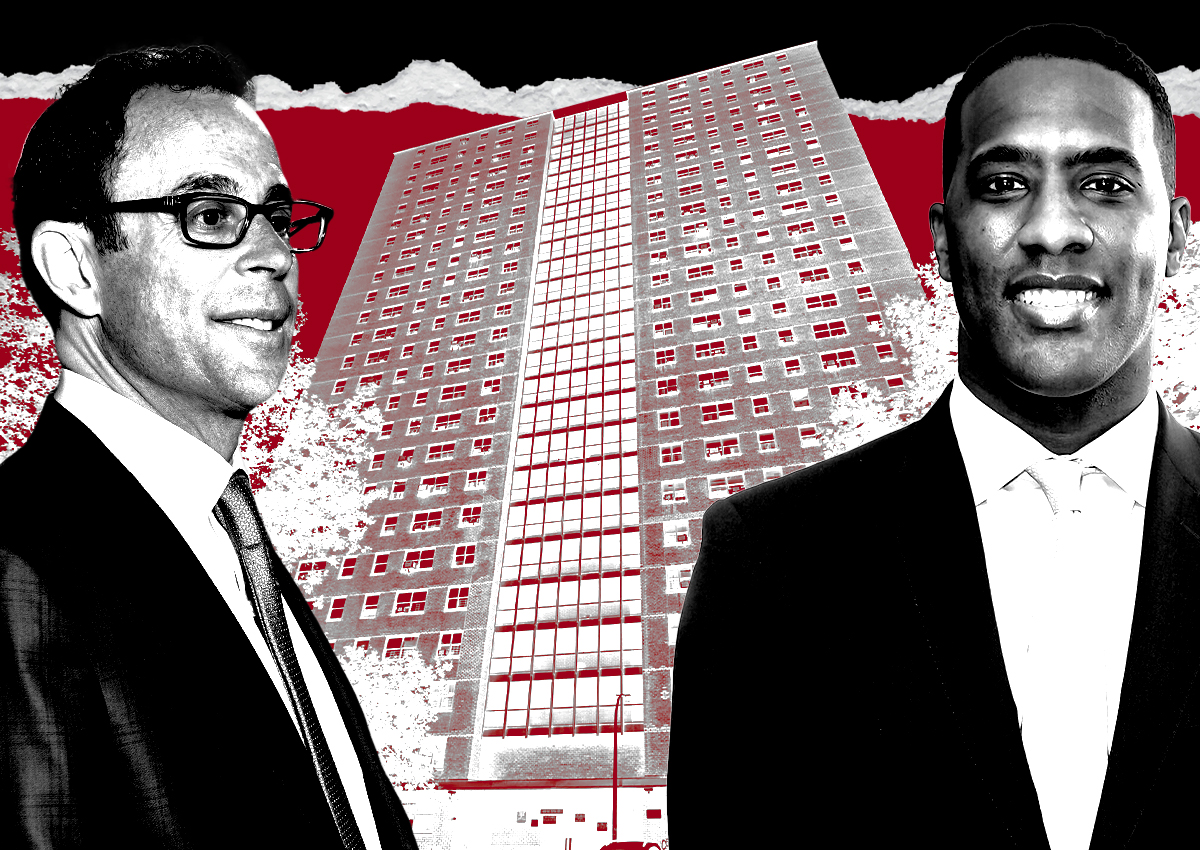
Protests have diminished since the initial years of the partnership program, called PACT/RAD, because tenants like their renovated campuses. But opposition continues at the West Chelsea development, where NYCHA will knock down a building that is no longer worth fixing and has enlisted Related to build 217 units.
A build-and-demolish plan at the same Fulton Houses was scuttled during the de Blasio years because of blowback, only for the property to deteriorate further. People are fighting the new plan, too. Some opponents don’t even live in public housing. They just don’t want construction disrupting their lives.
Local opposition is just one threat to NYCHA’s new strategy. Another is Zohran Mamdani, who may be mayor when the time comes to make deals with RFEI respondents. The deadline for submissions is Nov. 18, two weeks after the mayoral election.
If the socialist Assembly member wins, all bets may be off. His housing plan makes no mention of tapping the private sector. Quite the opposite.
“When the City allows private developers to build,” Mamdani’s housing plan warns, “we are inviting the private sector to profit.”
That is precisely what NYCHA is doing. Profit is the backbone of its plan: Developers get the chance to make money in exchange for doing work that NYCHA has been unable to do on its own.
Read more
Development
New York
Tenants greenlight Related, Essence’s NYCHA teardown
Commercial
New York
Tension rises as public housing gets private management
Residential
New York
City will use public-private partnerships to help fix more than 60K NYCHA apartments