

In breadth and name, a developer’s early vision for a pair of downtown San Jose blocks reflected the ambition and optimism that coursed through the neighborhood just a few years ago.
Proposed in 2021, amid the settling haze of the pandemic, Urban Catalyst’s “Icon” would feature more than half-a-million square feet of office space, held within a modern-looking 21 stories of glass and steel. Then, in 2023, after the project had already been approved, the developer floated a pivot away from office, suggesting the tower could instead hold 650 housing units.
Directly across East Santa Clara Street, the developer’s “Echo” proposal was set to be a multifamily tower of a similar aesthetic, reaching 27 stories with 415 residences.
Driven in part by a creeping acceptance that not enough workers are returning to the office, that sense of trajectory for Silicon Valley’s central business district has since dwindled. So, too, has the willingness of the capital markets to take ambitious bets on the neighborhood.
Now, Urban Catalyst’s plans to add to the city skyline have been condensed into a pair of eight-story, mixed-use buildings, according to permit applications filed with the city of San Jose’s planning department last week. The buildings will include 626 units and ground-floor commercial space.
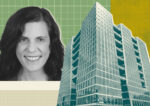
Urban Catalyst COO Joshua Burroughs blamed the change primarily on macroeconomic factors, from the cost of construction and tariffs, to conservative capital markets. Still, he has maintained a positive tone behind the estimated $300 million housing project, emphasizing that the revamped Icon and Echo will provide downtown San Jose with housing, a crucial element for the resilient, 20-hour neighborhood city leaders are trying to create.
However, some see the contracted vision as a broader recognition of, and perhaps resignation to, the city’s track since the pandemic.
“I’ll take 600 units downtown, but to go from 20 stories to eight is uninspiring,” a local economic development analyst told The Real Deal.
The analyst, who was not authorized to speak publicly, has tracked downtown developments for a decade. Although it’s common for ambitious early renderings to materialize into something more mild, Urban Catalyst has been among the rare local developers to get cranes in the sky, which adds to the “disheartening” signals sent by the project’s downsizing, he said.
Fifty miles to the north, downtown San Francisco has enjoyed a return of office workers and increased demand for space, particularly high-class, quality offices. While commercial leasing has surged in the broader Silicon Valley, workers have not returned to downtown San Jose at the same pace, one city hall staffer told The Real Deal.
“We think we’ve peaked in terms of office space,” the staffer, who was not authorized to speak publicly, said. “The only way we’re going to get more people downtown is by building housing.”
Some of downtown San Jose’s office ills can be placed on the nature of Silicon Valley, where startups can quickly grow from a garage into multi-million-dollar valuations. Because of that, Burroughs said “one unique thing about Silicon Valley” is that about 90 percent of the office space here is built speculatively, with no specific tenant in mind.
“Start-ups get funding, and suddenly they need 500,000 square feet of office space in a month, so you need a certain supply of office space sitting there, given the velocity at which these companies grow,” Burroughs said. “That means you’re speculatively building and needing to find investors who are comfortable with that approach.”
One recent example is Jay Paul Company’s 200 Park. The 19-story, 1 million-square-foot development has sat vacant since its completion in 2023.”.
Then there is Google’s stalled gigaproject, Downtown West. Approved in 2021, the tech titan envisioned bringing 4,000 homes, 7.3 million square feet of office space, and an estimated economic impact of $19 billion with its new neighborhood. However, the project hasn’t moved since approval.
Locals see both projects as tea leaves for when downtown San Jose’s office market rises out of its prolonged distress.
“There’s not no hope,” the city hall staffer said. “If we can’t fill 200 Park, and we can’t get the Google project going, then I don’t think we’re going to see the office market move.”
Read more

Commercial
San Francisco
AI companies driving stellar office leasing in SF
Commercial
San Francisco
Jay Paul lands $200M refi for green office building in San Jose

Residential
San Francisco
Google could restart Downtown West with housing project in San Jose