

As a boomer, I’m not even sure what I want. During the pandemic, my wife and I found ourselves with no children at home when our youngest got his first job after graduating college (shockingly, authoring market reports for a large regional real estate brand). His three other brothers had already begun their adult lives with their own homes, significant others, pets and, most importantly, were all gainfully employed. We ended up selling our home of 18 years as the Fed was pivoting to higher interest rates in 2022. We moved from a 4,500-square-foot house built in 1825, in need of TLC, on an acre to a 2,300-square-foot renovated house built in 1755 on nearly two acres in a small town farther from NYC.
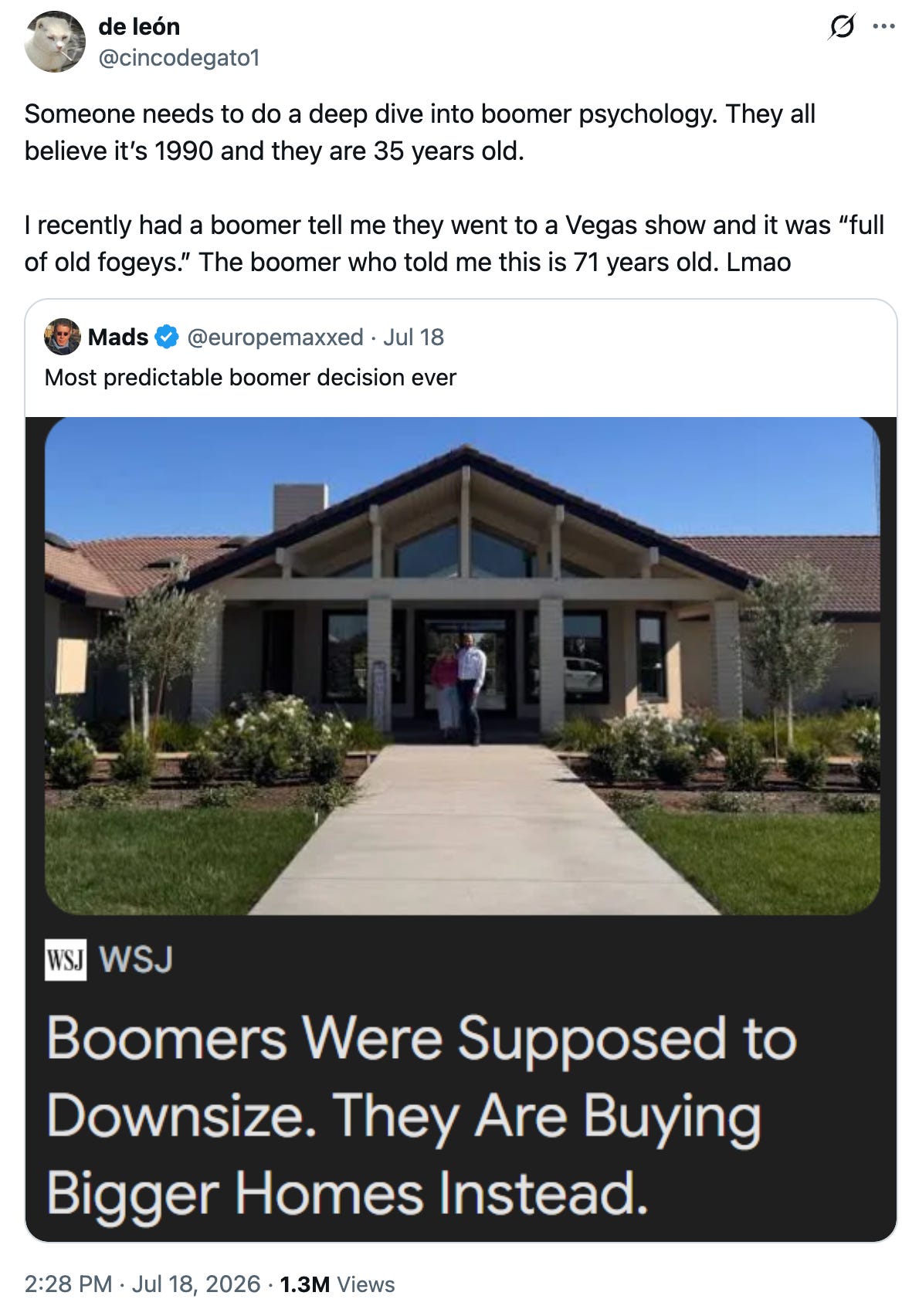
There have been two studies that dissected what boomers want for their next house. The most recent caught a lot of attention last week in the Wall Street Journal that talked about Boomers going big: Boomers Were Supposed to Downsize. They Are Buying Bigger Homes Instead. Even though I tend to think like the following tweet, I ended up downsizing.
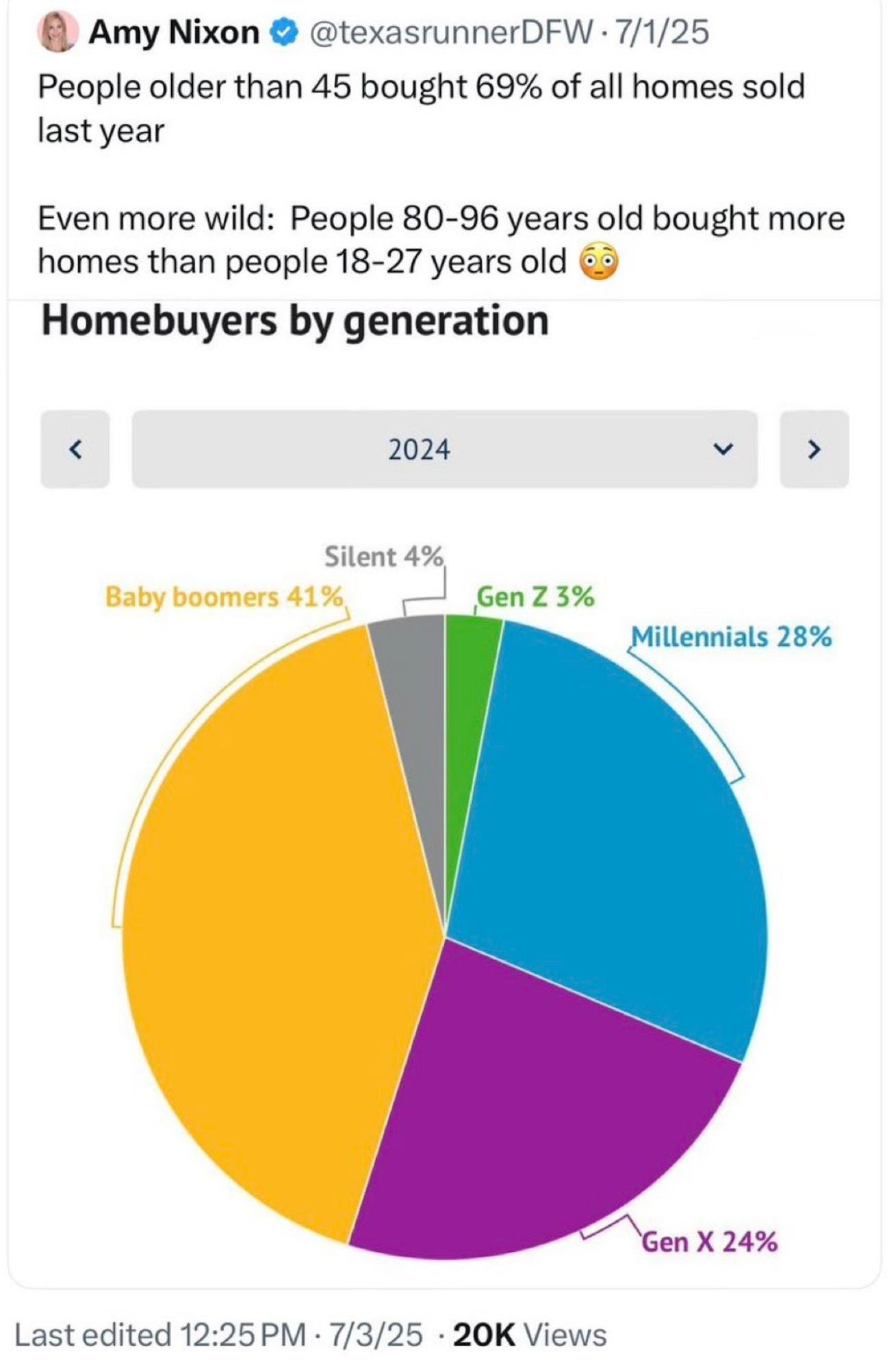
We pay attention to what Boomers do because they account for 41 percent of home sales.
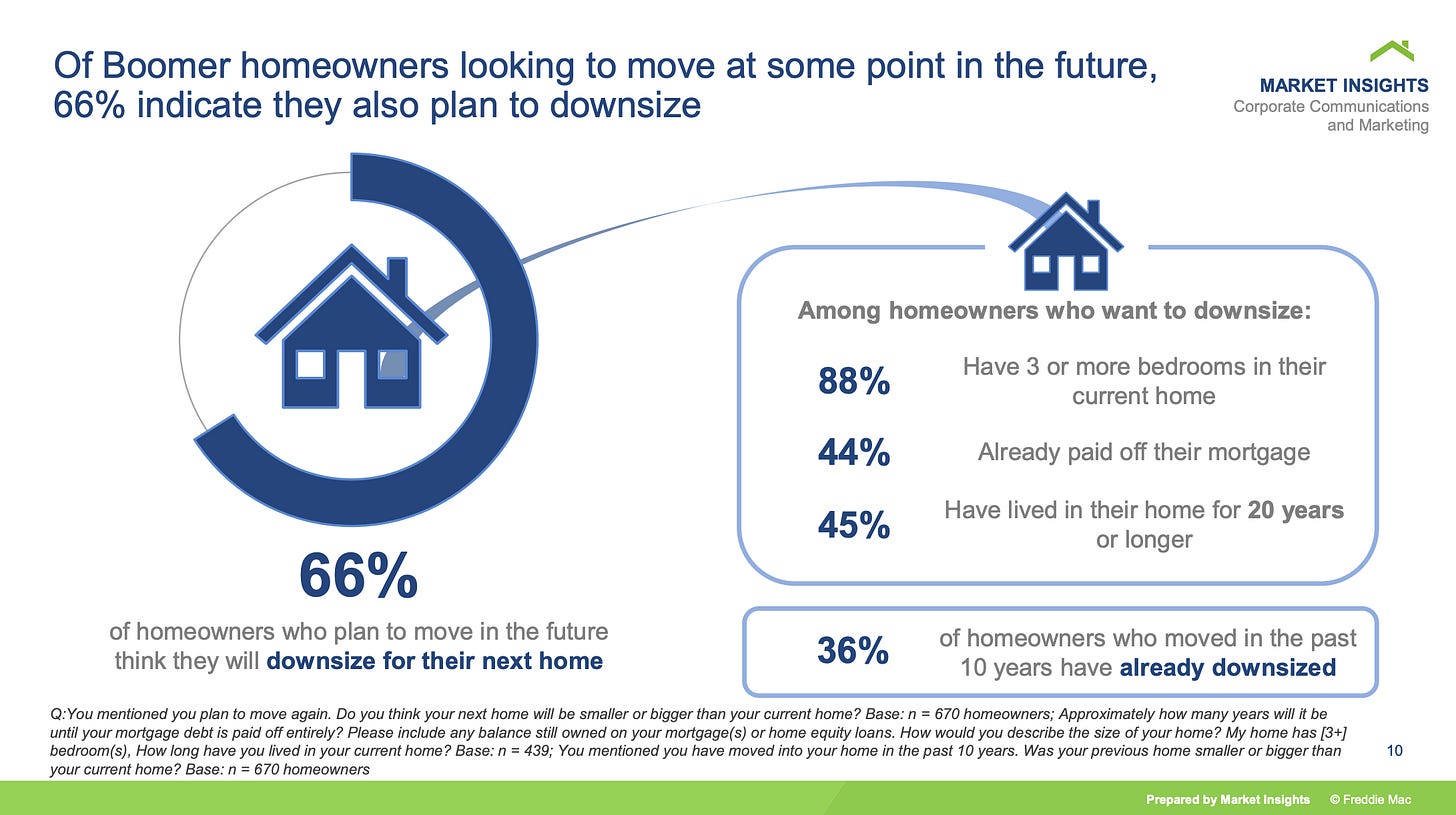
But back in 2024, mortgage behemoth Freddie Mac released a study saying 66 percent of Boomers planned to downsize. They released a widely covered study: 2024 Baby Boomer Consumer Research: Silver Tsunami Likely to Bring Wave of Wealth to Children of Baby Boomer Homeowners.
What is the difference between the two studies?
To be clear, both research pieces were consumer surveys, and their takeaway was the polar opposite.
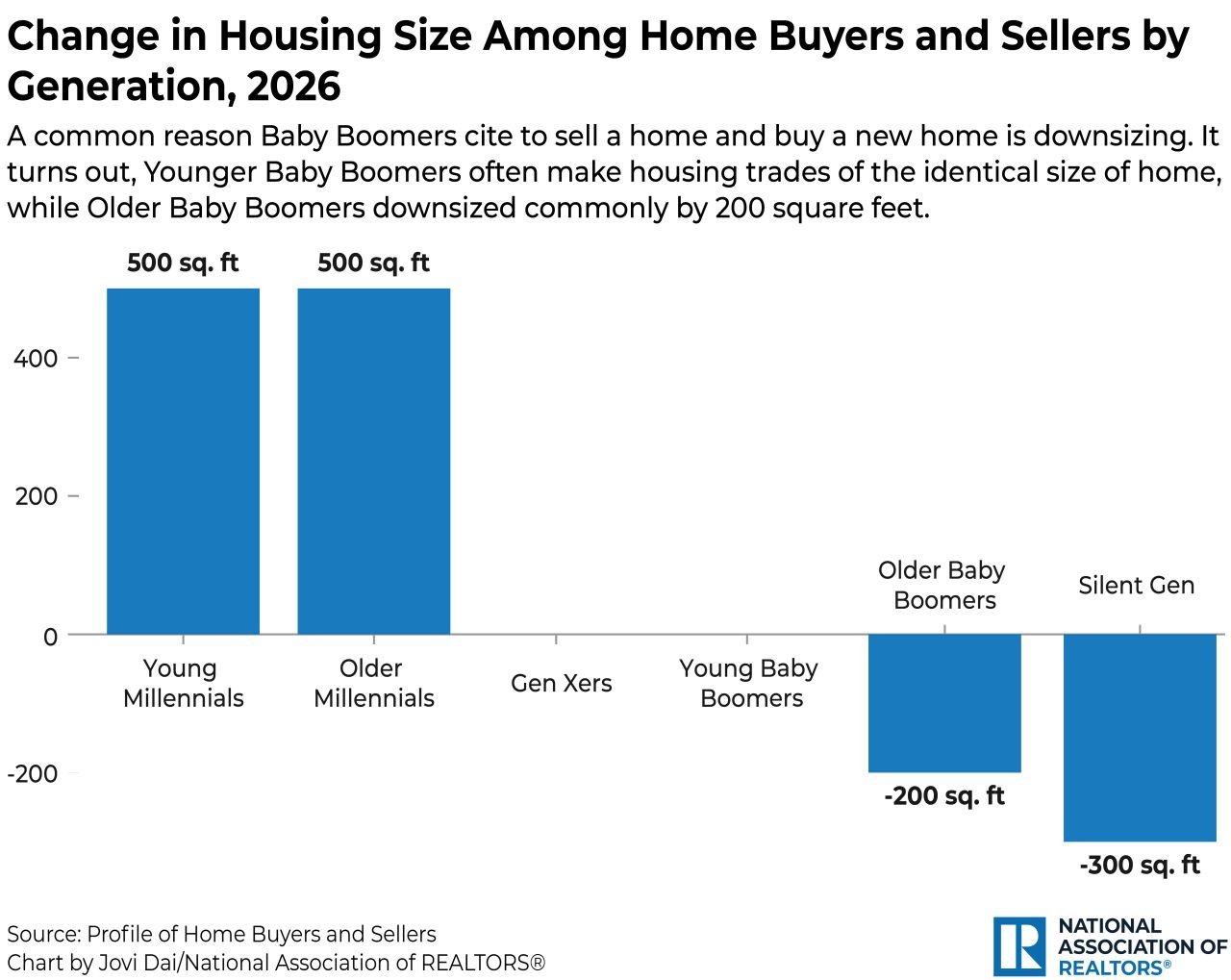
The recent Wall Street Journal piece that got a lot of love on social feeds for its contrarian position: Boomers Were Supposed to Downsize. They Are Buying Bigger Homes Instead was based on a NAR Research survey of 173,250 home buyers made a year prior (July 2025).
The Freddie Mac consumer research in 2024 was based on a survey of 3,003 homeowners and renters aged 60–78 and found that among Boomer homeowners who expect to move in the future, about 66 percent say they plan to downsize in their next move.
I’m guessing that part of the noise in these approaches is the definition of “downsizing.” It can be defined by square footage, number of bedrooms, price point or even maintenance burden. A boomer buying a more expensive but smaller luxury condo that NAR classifies as “upsizing in price” may self-report to Freddie Mac that they are “downsizing” because the home is easier to manage and has fewer rooms. I’m just speculating here, but if one survey defines downsizing as smaller square footage and the other as lower cost or lower maintenance, the same behavior can be coded differently in these two research pieces.
Why are surveys problematic?
The core issue is that the NAR and Freddie Mac surveys measure stated attitudes and intentions across different boomer samples and don’t observe actual transactions. Consumers of these “headline narratives” don’t get the nuances of the differences between the surveys. They rely on what people say about their behavior and plans, but actual transaction records, tax rolls and MLS logs capture what they did. Because surveys are generally self‑reported, respondents may misremember, exaggerate or present desirable answers that may even diverge from their real choices. For behavioral questions like “are boomers downsizing,” observed moves are typically more reliable than what boomers tell a survey. It reminds me of a saying I often heard early in my career: “buyers are liars” because they often don’t know what they want.
Final thoughts
Often when I read these takes on macro survey pieces, I get concerned when the article doesn’t have a chart. It means the interpretation of the results of the phenomenon was probably more on the light side.
Here’s what the differences between the two surveys come down to. NAR used recent buyers and seller experiences over the past 12 months, and the article lumped all boomers together. Freddie Mac used both movers and non-movers, and the time span was quite different, using their outlook for the next decade or longer. At the core of it, older boomers are most likely to sell smaller; many boomers buy similar or larger homes.
The other thought here: Surveys can kind of suck.
The actual final thought — Another reason why I love the NYC option in life.
Read more Housing Notes columns and sign up for email newsletters here.
Read more

Residential
National
Baby boomers are top home buyers and sellers in the U.S.

Commercial
National
Baby Boomers hold lion’s share of U.S. real estate